


History of Gandhidham
Gandhidham, located in the Kutch district of Gujarat, was developed in the early 1950s as a resettlement town for refugees from Sindh (now in Pakistan) who migrated during the partition of India in 1947. The land for the township was granted by the Maharao of Kutch, and the city was named after Mahatma Gandhi to honor his vision of service and community welfare.
The development of Gandhidham was spearheaded by the Sindhu Resettlement Corporation Ltd. (SRC) under the leadership of Bhai Pratap Dialdas. The city was strategically planned with wide roads, organized sectors, and public amenities, making it one of the first systematically designed towns of independent India.
Today, Gandhidham has grown into a vibrant city, closely linked to the nearby port town of Kandla, which has played a major role in the city’s economic development. The city is recognized for its cultural diversity, industrial growth, and modern urban planning.
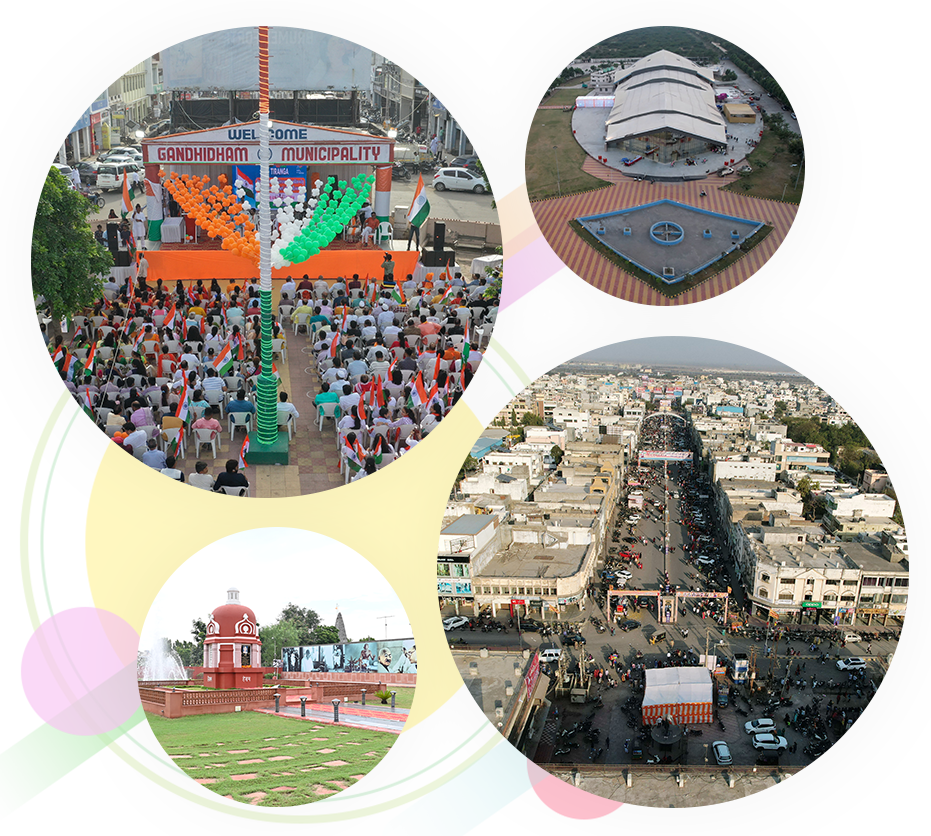
Before its formal foundation, the region around Gandhidham was largely a desert landscape with sparse settlements and traditional communities. The area had limited infrastructure, but its strategic location near the Arabian Sea and proximity to the newly built Kandla Port made it ideal for development into a modern township.
Foundation Era
Gandhidham’s foundation was laid after the partition of India, when thousands of displaced families from Sindh were provided homes and livelihood opportunities. The city’s planning emphasized community housing, public institutions, and industrial zones to support both economic and social integration.
Post-Independence Growth
The close proximity to Kandla Port boosted Gandhidham’s trade and commerce. With increasing industrialization, the town evolved into a hub for logistics, transportation, and allied businesses, attracting people from across India.
Key Developments Over the Years
Planned Township: Gandhidham was designed with modern urban planning, wide roads, and organized sectors to accommodate a growing population.
Economic Link with Kandla: The rise of Kandla Port turned Gandhidham into a commercial and industrial hub, supporting India’s import-export trade.
Cultural Diversity: With settlers from Sindh and other regions, Gandhidham became a melting pot of cultures, traditions, and festivals.
Industrial & Infrastructure Growth: Warehousing, logistics, rail connectivity, and highways transformed Gandhidham into one of Gujarat’s fastest-developing cities.